

Top 10 Tips For Assessing PAT Compliance in Dudley
The UK's regulatory framework for Portable Appliance Testing, or PAT, is fundamentally different than the prescriptive requirements applicable to fixed electrical equipment and fire safety devices. Unlike the fire extinguisher testing that is subject to British Standards and third party certification schemes, the PAT test is governed under a health and safety framework which emphasizes duty of care and risk assessment rather than mandatory schedules for periodic testing. Electricity at Work Regulations (1989) state that electrical systems, including portable equipment, must be regularly maintained to avoid harm. The Regulations, however, do not stipulate how this maintenance must be performed, or mandate a particular testing frequency or methodology. In this case, it is up to the dutyholder to perform a thorough and adequate risk assessment and determine an appropriate inspection and maintenance regime. The compliance of a workplace is not determined by the number of test certificates. It is determined by the process of making risk-based decisions and implementing them competently.
1. Electricity at Work Regulations: 1989
Regulation 4(2), of the Electricity at Work Regulations, 1989, is the cornerstone for PAT compliance. It states: "As necessary to prevent dangers, all systems must be maintained to prevent such dangers, as far as it is reasonably practicable." This places an absolute responsibility on employers to maintain all electrical equipment. The term system includes portable appliances. Importantly, the regulations do NOT mention "PAT Testing"; they mandate "Maintenance," an encompassing concept which includes visual inspections, user checks, combined inspection and testing, as well as a wider concept of maintenance. The risk assessment determines the frequency and type required of maintenance, not a set legal schedule.
2. The Role of the Health and Safety at Work etc. The Act of 1974
The Health and Safety at Work etc. The 1974 Act is the main legislation which establishes employers' general duties towards their employees and other people. According to Section 2 of this Act, employers must ensure that all employees are safe and healthy, in the best way possible. This includes providing safe plant and systems of work, which encompasses electrical equipment. Section 3 extends this duty to persons not in their employment, such as visitors, contractors, and members of the public. The PAT testing process is a key method of fulfilling these general duties by providing a structured approach to ensuring electrical equipment is safe.
3. Code of Practice of the IET for Electrical Equipment In-Service Inspections and Testing: Guidance and Best Practice
While not law itself, the Institution of Engineering and Technology (IET) Code of Practice is the universally accepted benchmark for best practice in PAT testing. The code provides detailed guidelines on implementing an appropriate maintenance regime.
Definitions of appliance categories and types.
Detail procedures for visual inspections, combined inspections and tests.
Based on the type of equipment and the operating environment, recommended initial frequency for inspection and testing.
Results of tests are graded on a pass/fail basis.
Courts and Health and Safety Executive Inspectors (HSE), who will judge whether the maintenance regime of a dutyholder is "suitable and enough," will use this standard. Deviation from the code without a robust, documented risk-based reason can be seen as a failure to comply with the overarching regulations.
4. Risk Assessment Priority
HSE has explicitly advocated a PAT-based risk-based testing approach. It is moving away from outdated concepts of blanket annual testing. The dutyholder must conduct a risk assessment to determine the need, nature, and frequency of inspection and testing. These factors are important in determining the outcome of this risk assessment.
Equipment type. For a double-insulated Class II appliance in low-risk environments, only a visual test is required. In contrast, for a Workshop appliance of the same class that requires regular formal tests.
Construction sites, warehouses and workshops are all high-risk environments. Offices and hotels are generally lower risk.
Users: Are the equipment users members of staff or public?
How old is the appliance and how often has it been damaged?
This risk-based assessment defines compliance with the system, not its volume of testing.
5. The Testers' Concept of "Competence
Regulation 16 of 1989's Electricity at Work Regulations requires that those who work with electrical systems have the technical knowledge and expertise to prevent danger. In PAT tests, "competence", does not always require formal qualification. However, the tester must possess:
Knowledge of electricity is essential.
Understanding and practical experience of the system on which they are working.
Understand the risks and precautions that are required.
Ability to correctly use the test equipment and interpret the results.
City & Guilds' 2377 qualification is a very popular qualification, and it provides an excellent education. But competence can also be attained through other means. The duty holder must be able show that the person who conducts the testing is competent.
6. Documentation requirements and record keeping
The Electricity at Work Regulations do not explicitly require record-keeping. Regulation 29 however states that proving due diligence and taking all reasonable steps in order to avoid committing the offense is a defence. Comprehensive records are the primary evidence of due diligence. A compliant records-keeping system includes:
Asset register for equipment
The risk assessment and maintenance plan should be documented.
Reports detailing each formal inspection or test. Includes appliance description, test result, pass/fail, next test date, and tester identity.
HSE officials or local authorities should be able to easily inspect these records.
7. Labelling and identification of appliances
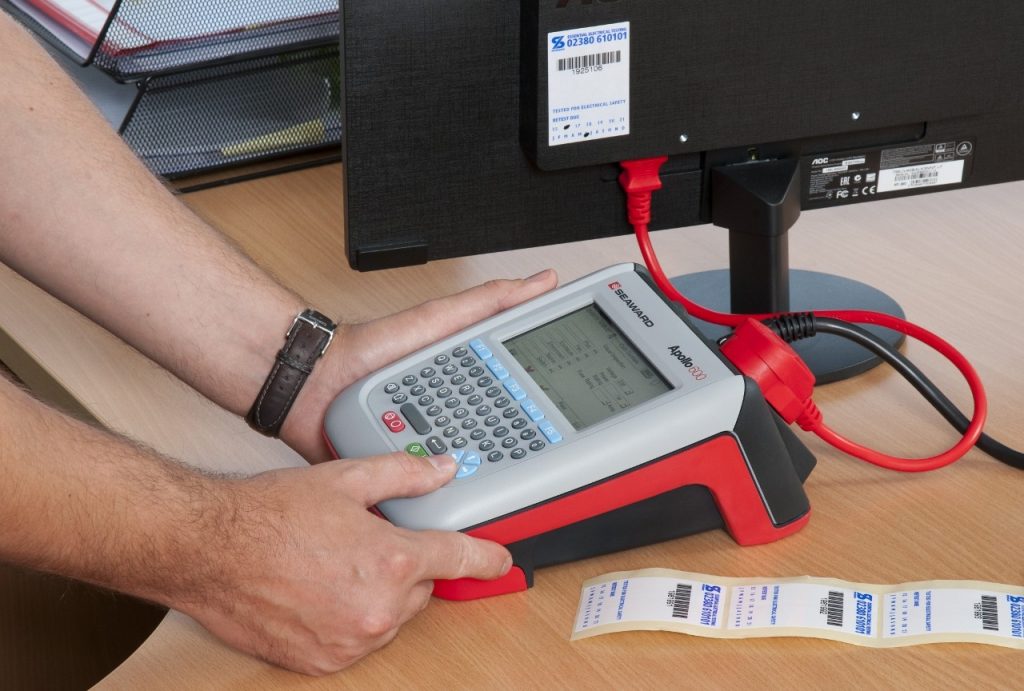
Effective labelling plays a crucial role in a compliant PAT. Each appliance that has undergone a formal combined inspection and test should be labelled with:
A unique asset ID that identifies each record.
Date of the test
Date of the next test or re-inspection.
The name or identifier of the tester.
Labels provide a clear visual indication of an appliance’s compliance for both inspectors and users. Labels should be durable, non-metallic, and non-conductive.
8. The HSE Enforcement Position and "Myth-Busting".
The HSE actively works to clarify misconceptions related to PAT testing. They stress that:
No law requires that all equipment be tested annually.
If a business has qualified staff, it can perform its own testing. It's not required to use a contractor.
Visual inspection is often more important than electronic testing and can identify the majority of faults.
An enforcement officer may look for a method based on risk. A company that tests its equipment without any support in the form of a risk assessment will be seen as less favourably by an enforcement officer than one who can demonstrate a more robust risk assessment and justify a longer interval between testing for equipment with low risks.
9. Interplay with Other Laws: PUWER
The Provision and Use of Work Equipment Regulations of the year 1998 (PUWER), apply also to portable appliances. PUWER requires that work equipment be suitable for its intended use, maintained in a safe state, and inspected to ensure it remains safe. Regulation 6 requires inspections when safety depends on installation conditions. PAT tests are a crucial method to meet PUWER's requirements for inspections and maintenance of electrical work equipment.
10. Insurance and Due Diligence
While insurance companies have certain requirements, the law bases its assessment on risk. As a condition to coverage, an insurance policy could stipulate that PATs are conducted by a third party annually. In the event that this rule is not followed, a claim may be invalidated. In the event of a serious electrical accident, insurers and HSE inspectors will first examine the dutyholder’s PAT test records and risk assessments. A well-documented, risk-based system is the strongest possible evidence of due diligence and a robust defence against prosecution or a invalidated insurance claim. Follow the top rated emergency light testing in Dudley for more info.
Fire Extinguisher Servicing Top 10 Tips in Dudley
It's a lot more difficult than simply finding someone to perform an annual check-up when selecting a UK fire extinguisher provider. A comprehensive provider will be an all-in-one shop for your fire safety equipment. This person will offer an array of integrated services that will ensure complete compliance, and ease the administrative burden. The quality of services provided by a business is an indicator of its expertise dedication, determination, and capacity to be an over-the-long term partner. Understanding the complete range of services available starting with risk assessments and installation, through regular maintenance, and finally the support needed in an emergency and disposal at the end of the life it allows you to make well-informed choices that will ensure safety and efficiency.
1. Routine Maintenance and Scheduled servicing – This is the core of our service, and is strictly controlled by BS 5306-3. A full-service supplier will handle the entire schedule of time: monthly visual checkups (often in conjunction with your advice) and the annual mandatory service for all extinguishers for fire. Extended service (discharge testing) for the foam, water, or powder models every five years. And the overhaul and testing of pressure for CO2 Extinguishers every 10 years. The visits must be scheduled in advance, and should be certified.
2. Installation and Supply of New Equipment: A reliable service isn't only maintenance the equipment, they provide advice and provide the appropriate equipment. This includes a site inspection to determine the kind size, dimensions and ratings of extinguishers required according to the risk of fire assessment, and the particular hazards present in the building (e.g. Class A B C F electrical). They'll then supply the BSI kitemarked or similar approved equipment, then install it according to BS5306-8 and ensure correct signage and the appropriate heights for mounting.
3. Fire Risk Assessment (FRA). The majority of the top servicing firms have certified assessors who conduct or review any legally required Fire Risk Assessment. It is crucial to conduct this as an independent process. However, if your extinguisher company participates in or completes the FRA it will ensure a fully-integrated approach in which equipment provision aligns directly with the identified risks. It creates an unbroken audit trail starting with hazard identification and ending with monitoring measure implementation.
4. Emergency Call-Out and Reactive Maintenance Equipment could be stolen, damaged, or discharged accidentally at any time. A reputable company will provide an emergency callout service that can quickly replace or repair your equipment. This will ensure that your property won't be without protection or non-compliant for longer than necessary. This can include the replacement of damaged or lost equipment.
5. Other Fire Safety Equipment Servicing: Your fire safety strategy extends beyond the portable extinguishers. A true full service provider will also be able to maintain, inspect and oversee the other equipment you have. Fire blankets, hoses reels as well as fire alarm systems dry/wet stair risers are all included. This method ensures uniformity, reduces paperwork and is often a way to reduce overall costs.
6. Education and training services Training and education services: Only if those who use it are able to operate it, can the equipment be efficient. Numerous providers also provide complementary services such as extinguisher (often with live-fire simulations), and training for fire marshals. This type of training helps staff as well as increases safety. It also demonstrates your commitment to compliance.
7. Online portals and comprehensive documentation are mandated by law. Leading companies are now providing sophisticated documentation, not just documents on paper. These include detailed digital service reports and asset registers. You can also log on to online customer portals to view your service history, download certificates, report faults and schedule appointments.
8. Disposal Services and Environmental Services – Under Duty of Care regulations, proper disposal of extinguishers decommissioned constitutes a legal and environmental obligation. A full-service company will do this efficiently, employing certified carriers for waste and supplying Waste Transfer Notes (WTN) as evidence that the proper legal disposal was taken. This will allow you to avoid paying fines for the improper disposal of vessels with pressurized pressure and hazardous material.
9. Planned Preventative Maintenance (PPM) and Asset Management Beyond reactive calls, the best providers offer proactive PPM agreements. They track all due dates of maintenance for all equipment types. They automatically schedule visits and provide you with an up-to-date maintenance schedule. It removes your administrative burden and ensures that there is no service will be delayed.
10. Consulting and Compliance Auditing For more complicated or larger sites, reputable providers provide consultation services. This could include an analysis of your current fire safety procedures in relation to the law, giving advice on remediation plans and continuing compliance audits. View the top fire safety in Dudley for site examples.
